Photo: Marcin Jozwiak via Pexels · Pexels License
For years, logistics automation meant running repetitive tasks on a fixed schedule. The shift now underway goes further: AI systems that interpret goals, sequence the work and adjust decisions in real time. For anyone managing a fleet, this changes how operations are planned and supervised.
From automation to autonomy
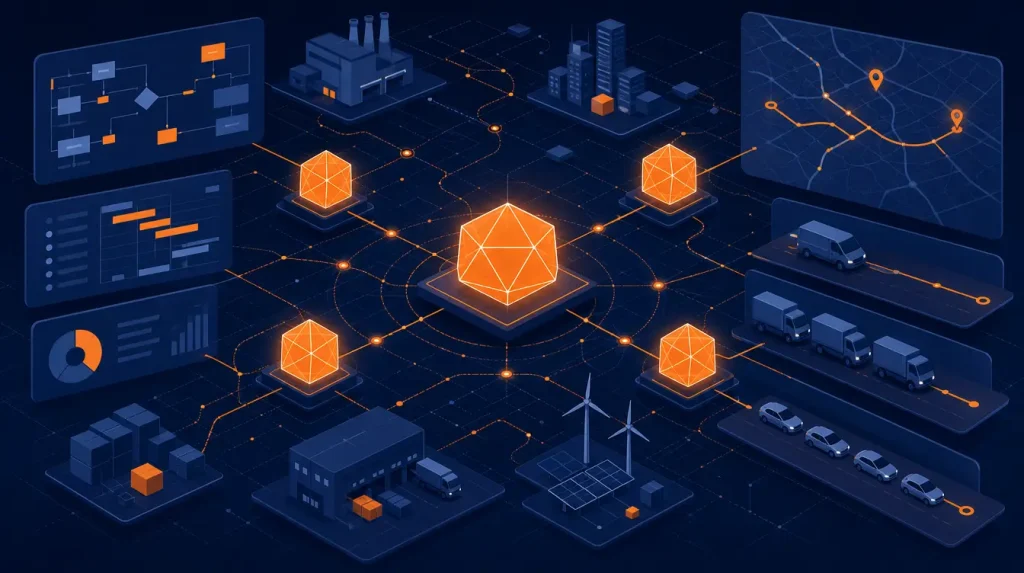
The difference is fundamental. An automated system repeats a predefined process; an autonomous one reads the context and decides. According to Infobae, the convergence of physical AI, robotics, advanced simulation and new governance mechanisms is redefining how logistics operations are planned, executed and supervised — from production through transport and storage. It is no longer only about processing information, but about coordinating and running entire processes.
Real-time data is the starting point
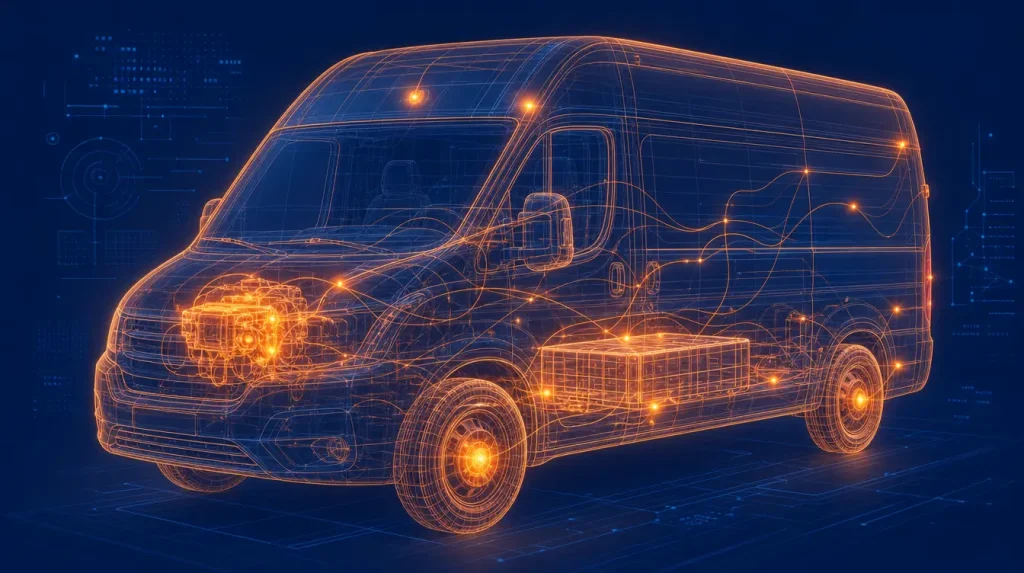
No autonomous decision is better than the data feeding it. IoT sensors, telemetry and location tracking detect changes the moment they happen — a delay, a detour, a fault — and respond without waiting for human intervention. Specialized models, trained on operational data, anticipate bottlenecks and help allocate resources ahead of time. The quality of the signal — position, vehicle status, timing — defines how reliable the automation built on top of it can be.
In practice, this already shows up in everyday transport tasks. A route that recalculates itself when congestion appears, a maintenance alert raised before a vehicle breaks down on the road, or a fuel report that adjusts to real driving behavior. None of these capabilities work on partial or outdated data: they depend on a continuous, accurate feed from every unit in the fleet.
Autonomy with control and traceability
Autonomy does not mean losing control. The article stresses that these operations preserve governance, transparency and auditability, essential in critical processes. Multi-agent systems collaborate on complex tasks, yet every decision is logged and reviewable. For a fleet manager, that means fewer manual tasks and a dashboard where each exception is documented.
Autonomous logistics does not replace the fleet manager; it gives them better tools to decide. And the first step remains the same as always — capturing reliable data from every vehicle. At EsencialGPS we help companies build that information foundation. Learn more at www.esencialgps.cl.
Based on data from Infobae.