Photo: Freek Wolsink via Pexels · Pexels License
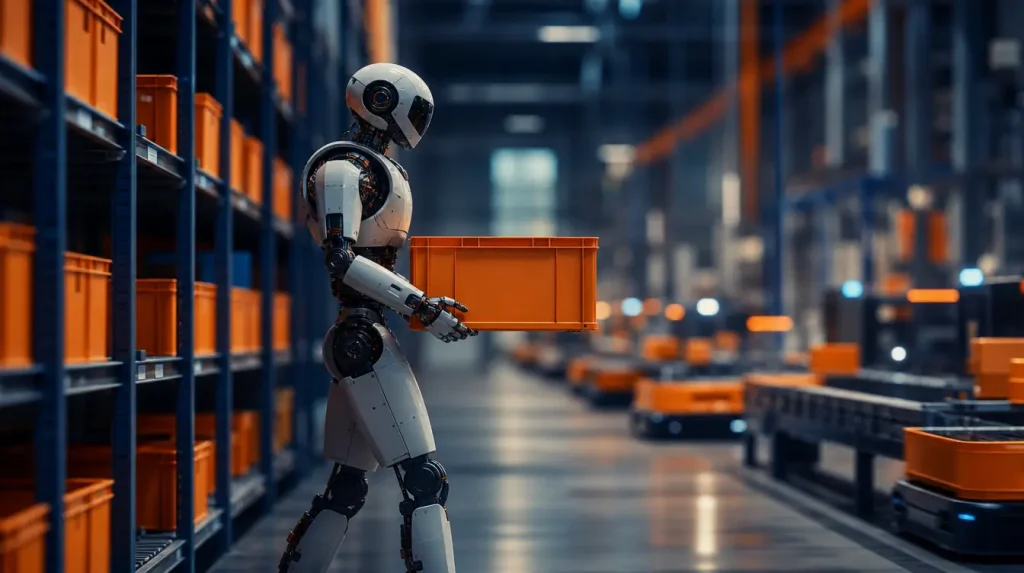
For years, humanoid robots were more of a trade-show promise than a production-floor reality. That started to shift when Boston Dynamics unveiled Atlas as an “enterprise-grade system” built for manufacturing, maintenance, and repair at industrial scale, with additional deployments announced for 2026 under automotive giant Hyundai Motor Group.
From Lab to Production Line
Atlas left its hydraulic architecture behind in 2024 for a fully electric design capable of working alongside people thanks to proximity safety sensors. It can run autonomously or be operated remotely through VR or a tablet interface, and its battery delivers roughly 4 hours of runtime with an automated swap in under 3 minutes, using standard 110V or 220V outlets with no special infrastructure required. Under Hyundai Motor Group — majority shareholder and primary customer — the target is production capacity of up to 30,000 units a year, with deployment at the Robotics Metaplant Application Center.
Fleet Management for Robots, a Familiar Challenge
One relevant detail for any industrial operation: Atlas was designed for “fleet-level management and supervision,” not as a standalone unit. It’s the same logic vehicle fleet managers already know well: high-value assets are only as useful as the visibility you have into their status, location, and availability. The difference now is that this monitoring logic extends from trucks and machinery to robots sharing the factory floor with people.
The Gap Between Promise and Real Deployment
The comparison with Tesla’s Optimus is unavoidable. Elon Musk projected “thousands” of robots operating in factories by the end of 2025, but there’s still no public evidence that goal was met; Optimus remains in internal testing. Boston Dynamics, meanwhile, has already brought Google DeepMind on as an AI partner — integrating the Gemini Robotics model to speed up task learning — and frames that capability as a roadmap item, not an immediate deployment promise.
For companies managing fleets of vehicles, equipment, or mobile assets, the underlying message is the same one they already apply to their own operations: autonomy without centralized visibility doesn’t scale. Whether it’s a truck, a machine, or a humanoid robot, the question remains the same — where is it, what state is it in, and how available is it. If you’re looking for that visibility for your own fleet, learn more at geo.esencialgps.com.
Based on data from Xataka.