Photo: NASA via NASA · Public Domain
On 6 September 2026, the German company Isar Aerospace placed its Spectrum rocket into orbit from the Andoya spaceport in Norway. With that flight, Europe saw a private company reach space on its own launch vehicle for the first time, a milestone previously achieved only by operators in the United States and Asia. The result follows years of sustained investment in the continent’s space industry.
A microlauncher for small payloads
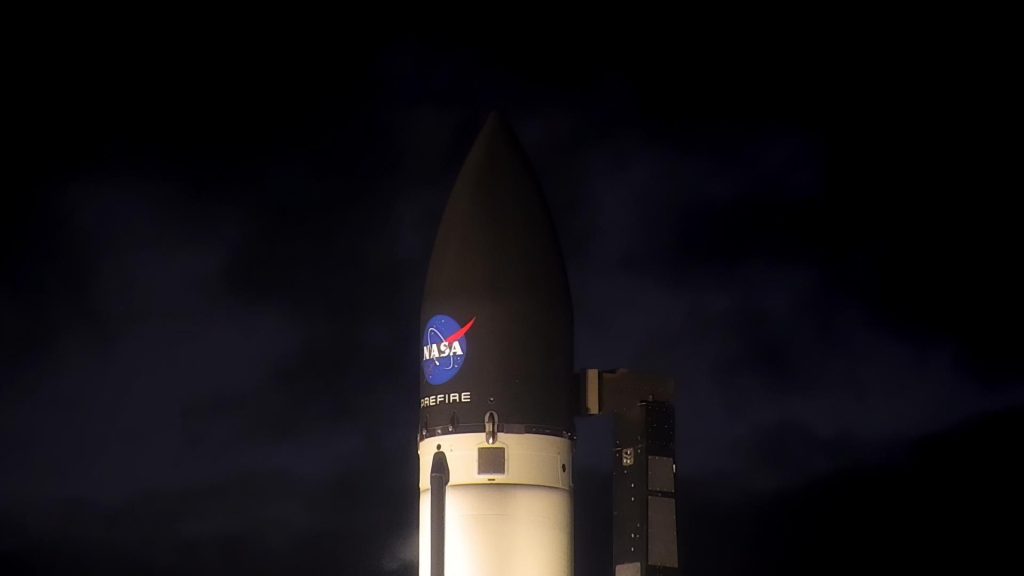
Spectrum stands 28 metres tall and 2 metres in diameter, and uses ten engines: nine on the first stage and one on the second. It can carry up to 1,000 kilograms to low Earth orbit, known as LEO. On this mission it carried six payloads, including several CubeSats and European educational experiments. It was the company’s second attempt: the first, in 2025, ended 30 seconds after liftoff. Fixing those faults in little more than a year reflects the fast iteration that defines the so-called «new space» sector.
Why cheap access to low orbit matters
Low Earth orbit now holds most of the world’s Earth-observation and communications satellites. Having more small, frequent launchers cuts the waiting times and costs of bringing new constellations into service. Those constellations are what, years later, feed the mapping, weather and connectivity services used by logistics operators and transport fleets. A more competitive launch market in Europe speeds up that entire chain and reduces reliance on outside providers.
Europe builds its own capacity
The Director General of the European Space Agency, Josef Aschbacher, described the flight as a historic moment for the continent’s industry. Other projects are advancing in parallel: Spain’s PLD Space holds a 158.9 million euro contract to develop its MIURA 5 rocket. The trend points to a more diversified launch offer, with private players competing on price and flight frequency, something that seemed distant outside the United States only a few years ago.
At EsencialGPS we follow satellite and connectivity advances closely because they are the foundation of modern fleet tracking. Learn more at www.esencialgps.cl.
Based on data from Infobae.