Photo: NASA Goddard Photo and Video via Flickr · CC BY 2.0
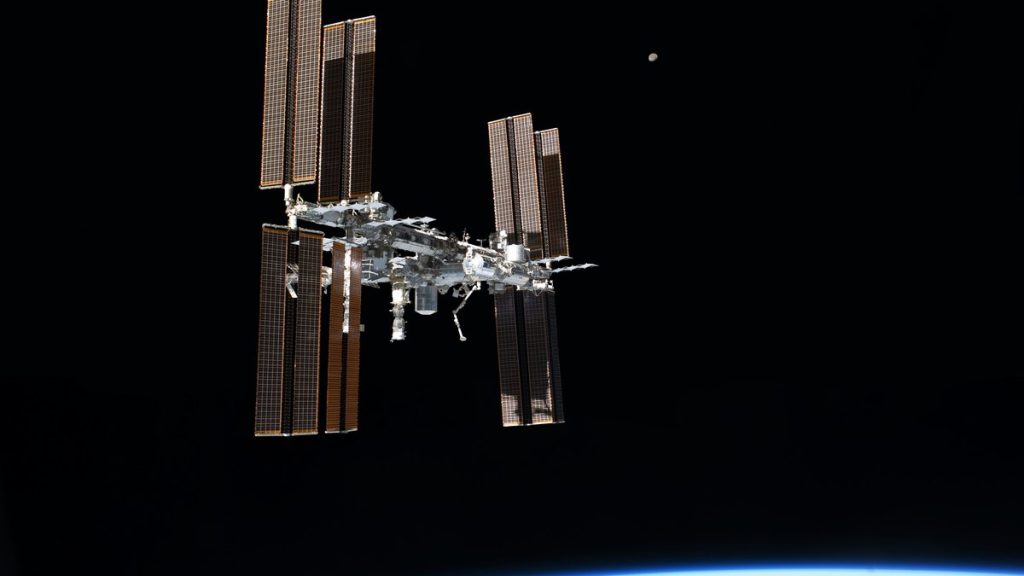
The International Space Station (ISS) has a retirement date: 2031. After more than two decades hosting hundreds of astronauts, its successor will not come from a single agency but from several private companies racing to build the first commercial space stations. MIT Technology Review named this technology one of its 10 Breakthrough Technologies of 2026, and the timeline already has concrete names and dates.
Who is building the ISS successors
NASA has committed more than USD 500 million in contracts with multiple companies to support private station development. First in line is Vast Space’s Haven-1, a bus-sized habitat designed for crews of four on stays of around 10 days. Originally planned for May 2026, its launch has moved to early 2027. Next come Axiom Space’s station, built from five modules around a boutique-hotel concept, and Voyager Space’s Starlab, both targeting 2028. Blue Origin’s Orbital Reef is aiming for 2030. Each project is, in practice, a test of how quickly private industry can deliver dependable infrastructure in orbit.
A microgravity lab with a business model
The key difference from the ISS is the economic model. These platforms are looking for customers willing to pay to be in orbit: research institutions, pharmaceutical companies and private visitors. Microgravity makes it possible to study plant growth or test drugs under conditions that cannot be reproduced on the ground. For now, a ticket is expected to cost tens of millions of dollars, although the industry expects prices to fall if the ventures become profitable.
Why it matters beyond space
The shift from state-owned infrastructure to a market-driven model is a pattern seen across many industries: when several players compete to deliver a service, timelines tighten, costs become visible and technology matures faster. It is also a lesson in risk management. Haven-1’s delays show that, even with public funding, bringing complex hardware into operation requires rigorous testing and realistic planning. For any business that relies on critical technology, from an industrial plant to a fleet on the road, the discipline is the same: measure, verify and rely on trustworthy data before scaling up.
Low Earth orbit is becoming a workplace, and the next decade will show whether commercial stations can sustain themselves. Meanwhile, back on the ground, accurate information remains the foundation of sound operational decisions. To see how satellite technology helps manage vehicles and assets every day, learn more at www.esencialgps.cl.
Based on data from MIT Technology Review.