Agricultural biotechnology has moved from laboratory promise to a cornerstone of food security. According to a report by La Tercera, Chile is consolidating its position as one of the world’s centres for developing and testing biotech seeds, at a time when the global population is projected to reach 9.8 billion by 2050 and pressure on food production keeps rising. The debate is no longer whether to use these tools, but how to scale them responsibly and with full traceability.
From fifty years to under five
The figure that captures the shift is development time. Breeding a new apple variety through traditional methods could take up to 50 years; a vegetable, close to a decade. With gene-editing tools, that window drops to under five years. The technique, recognised with the Nobel Prize in Chemistry, mimics genetic changes that occur naturally and works in a targeted way, unlike classic transgenics, which insert genes from other species. Shorter breeding cycles make it easier to respond quickly to pests, drought and shifting market demand.
Why Chile
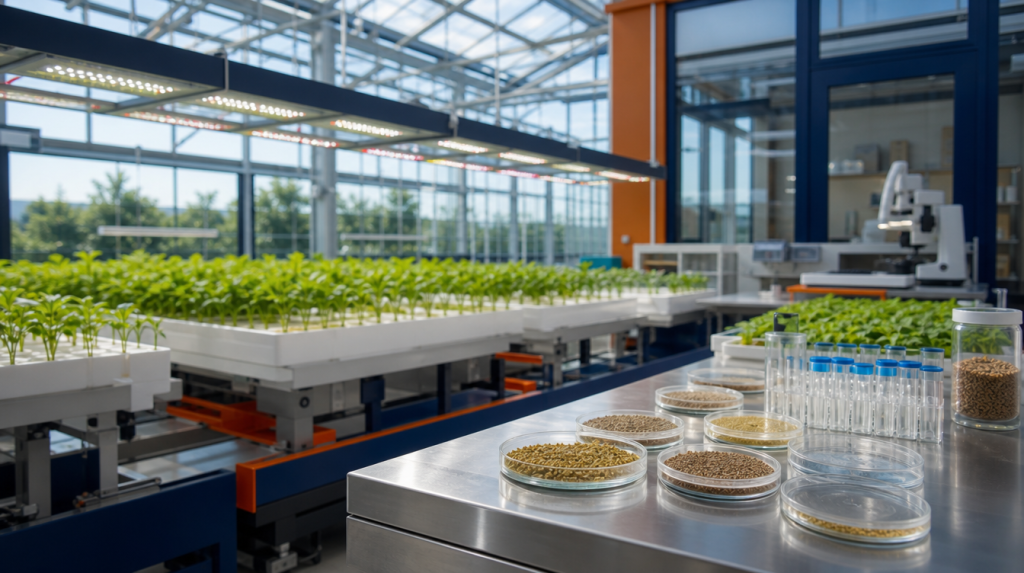
Chile’s advantage combines geography and scientific capacity. Its southern-hemisphere location allows counter-season work relative to the northern hemisphere, adding an extra breeding generation each year, and its climatic diversity enables field trials under very different conditions within a single country. Add the research infrastructure of institutions such as the Agricultural Research Institute (INIA), and the outcome is clear: Chile ranks second worldwide in applications for gene-edited products and is the leading seed exporter in the southern hemisphere.
Economic and logistics impact
The biotech seed industry supports around 30,000 jobs a year in Chile and drives an export chain built on tight time windows: harvest, conditioning, quality control and shipment to international destinations. «If we keep doing things the way we did 100 years ago, we will not produce the food we need,» warns Miguel Ángel Sánchez, executive director of ChileBio. For the logistics operators moving this material, traceability, the cold chain and on-time delivery matter as much as the genetics itself: a delay or a temperature breach can undo months of work and put a phytosanitary certification at risk.
Biotech seeds show how applied science can shorten timelines, open markets and put fresh demands on the logistics that support them. The winners will be the operators that treat data as one continuous chain, from the lab bench to the delivery truck. At EsencialGPS we keep a close eye on the technologies reshaping industry and fleet operations. Learn more at www.esencialgps.cl.
Based on data from La Tercera.