Cainiao, Alibaba’s logistics arm, set out to deliver parcels anywhere in the world within 72 hours by fitting sensors and cameras across nearly every link of its network. Behind that ambition sits a trend that is redefining logistics: pairing IoT, edge computing and artificial intelligence to achieve real-time traceability. Here is what it means for fleet managers.
From location to shipment condition
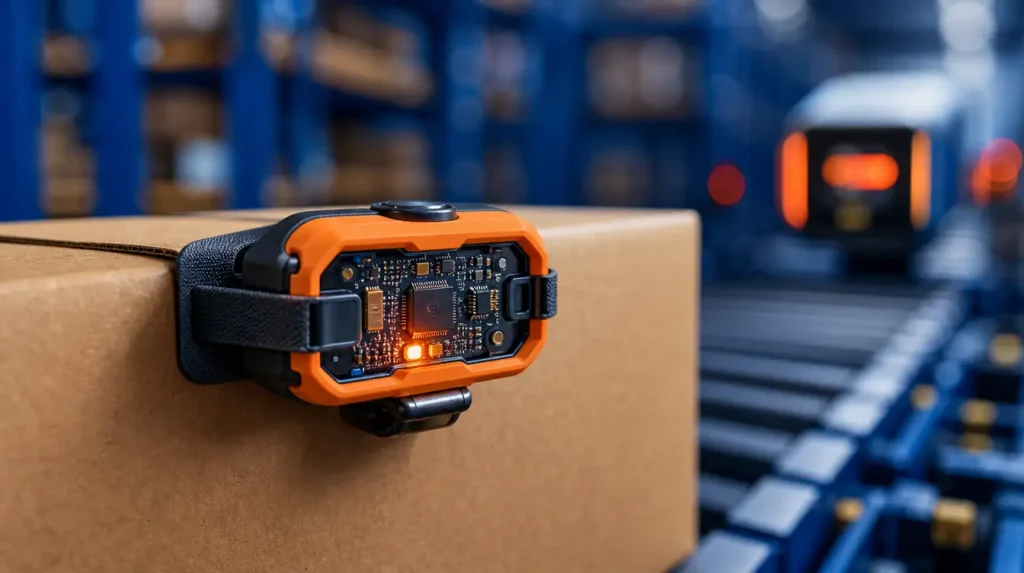
For years, tracking a shipment meant little more than knowing where it was. Today IoT sensors add context that used to be invisible: temperature, humidity, shocks, door openings and vibration. Across Cainiao’s network, sensors and cameras spread through warehouses and vehicles feed systems that not only locate a parcel but flag damage or deviations before the customer ever notices. That shift, from a dot on a map to a full picture of the cargo’s condition, is what now separates a reactive operation from a preventive one.
- Cargo condition: temperature, humidity and impacts.
- Vehicle status and route behaviour.
- Real per-stage timing, not spreadsheet estimates.
Edge computing: deciding at the edge
Sending all that data to the cloud adds latency and cost. Edge computing processes information close to where it is generated, inside the vehicle or the distribution center, and transmits only what matters. For a fleet, that means immediate alerts, such as a route deviation or a door opened at an unauthorized point, without depending on a flawless connection along every stretch of road. Cainiao runs an operation spanning 190 countries and more than 3,000 logistics partners on top of this kind of distributed architecture, where each node decides locally and headquarters receives only what it needs.
AI that anticipates, not just reports
With clean, continuous data, AI models move from describing what already happened to anticipating what comes next: estimating delays, suggesting load reassignments or spotting maintenance patterns before a breakdown. The 15-billion-dollar investment Alibaba has poured into Cainiao since 2018 is aimed precisely at turning that data into automated decisions, rather than plain reports read only after the problem has passed.
What to watch in your own fleet
You do not need to operate at global scale to benefit from this trend. The starting point is securing reliable, continuous data: location, vehicle status and, where it adds value, cargo sensors. On that foundation, real-time alerts and predictive analytics become a natural extension. The key is deciding which events justify an immediate response and which can be reviewed later, so the team is not buried under notifications.
The EsencialGPS platform combines each vehicle’s location with sensor data and real-time alerts, so your operation can react before a problem escalates. Learn more at www.esencialgps.cl.
Based on data from Xataka.