The future of freight is already attracting serious capital: Waabi raised US$750 million in January 2026, and industry estimates suggest the autonomous trucking market could top US$600 billion a year by 2035. Here is what sits behind «Level 4» autonomous trucks—and why fleet managers should track them closely even while their operations still rely on drivers.
Fewer human errors on the road
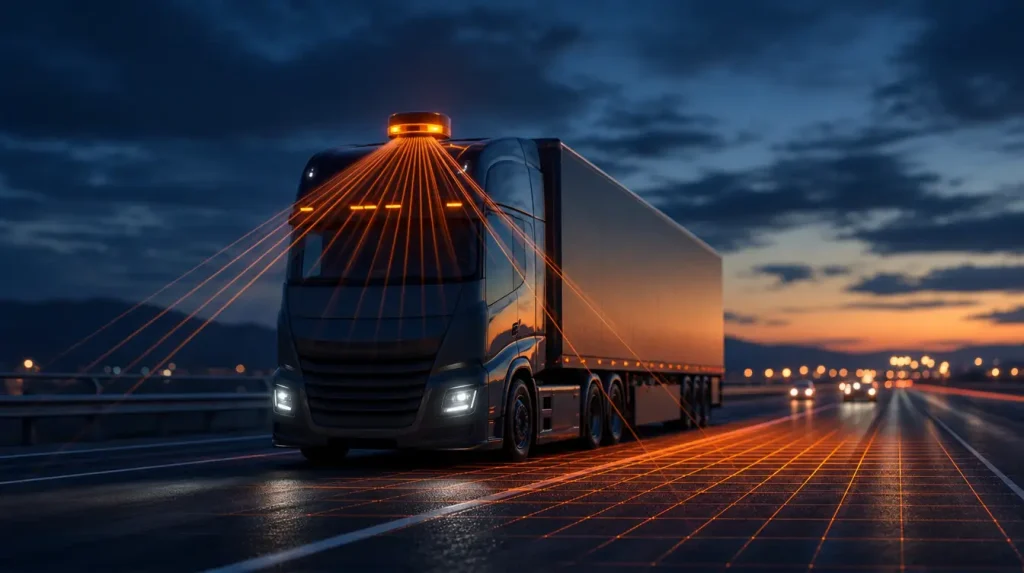
Safety is the core argument. Human error is involved in 90% to 96% of traffic accidents, and roughly 2 million people die on the world’s roads every year. Autonomous trucks aim to cut that toll by combining several sensor types that perceive far more of the road than a person can:
- Lidar for precise distance measurement.
- High-definition cameras to read lanes and signage.
- Radar to detect obstacles in any lighting condition.
«Physical AI,» not a black box
Raquel Urtasun, Waabi’s CEO, stresses a key point: «This is physical AI; this is not like the digital world, where suddenly you can switch immediately.» Her company describes itself as «simulation-first,» exposing the system to billions of cloud simulations before it reaches public roads. She also argues for a redundant platform validated together with the vehicle maker—Volvo, in Waabi’s case—rather than opaque systems that cannot be audited. The sector projects that autonomous vehicles could account for around 15% of U.S. trucking miles by 2030.
What it means for your fleet today
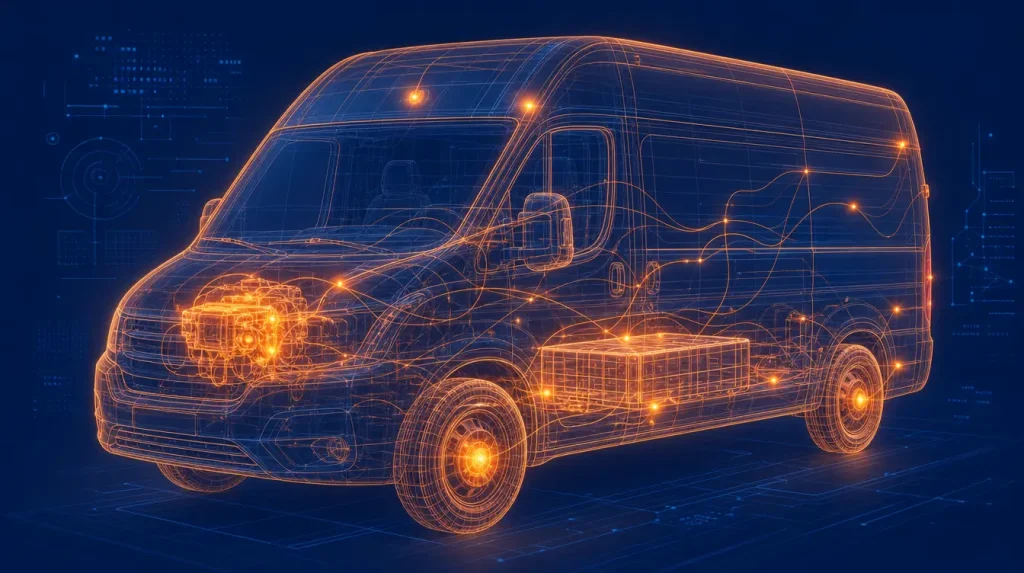
Adoption will be gradual and corridor-by-corridor, not overnight. In the meantime, the foundation that makes autonomy possible—sensor data, real-time location and trip-level traceability—is the very same information that already lets a conventional fleet run more safely and efficiently. Operators who organize and use that data now will arrive far better prepared for the next stage.
The EsencialGPS platform brings together real-time location, sensor data and per-vehicle alerts, so you can start building today the information foundation your fleet will need tomorrow. Learn more at www.esencialgps.cl.
Based on data from IEEE Spectrum.