Photo: Freek Wolsink via Pexels · Pexels License
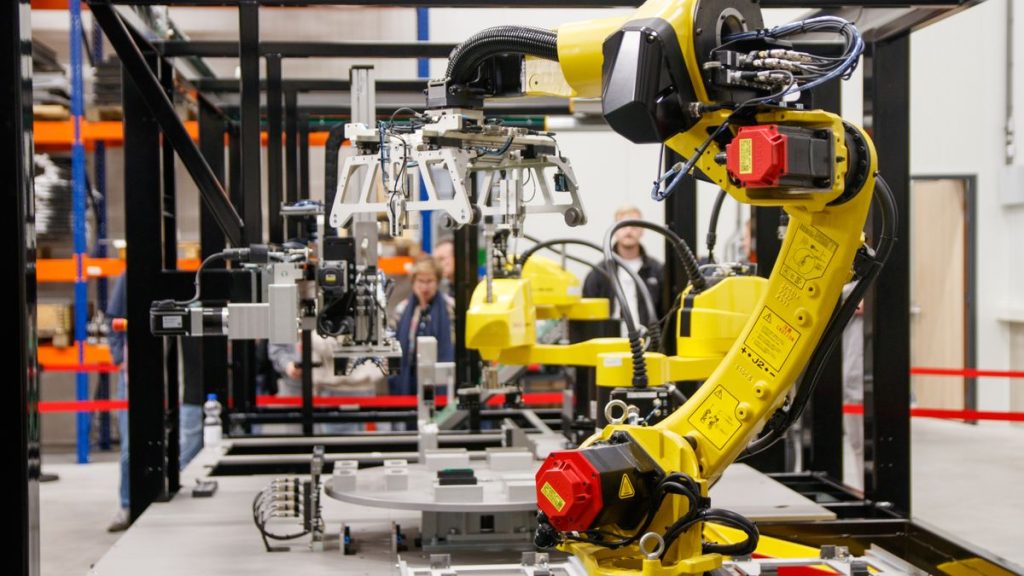
For years, industrial automation ran on a simple logic: machines executing the same fixed sequence over and over, with no ability to adapt to what happens around them. That logic is starting to change. Google and FANUC America, one of the world’s largest industrial robot manufacturers, announced a strategic alliance to embed artificial intelligence into robots that no longer just run pre-set tasks: they read their environment through sensors and make real-time decisions on the production floor.
From fixed sequences to real-time decisions
The difference runs deep. A traditional robot repeats a programmed motion regardless of what happens around it; if conditions change, it stalls or fails. AI-equipped robots, by contrast, process sensor data to adjust their behavior on the fly: they recognize variation in parts, work around unexpected obstacles, and carry out variable tasks under real production conditions. Since FANUC’s platform debuted at the IREX robotics expo in Tokyo in December 2025, the company has already shipped more than 1,000 robots built on this technology, capable of handling payloads from 3 kilograms up to 2.3 tonnes.
The decision moves to the shop floor
FANUC CEO Mike Cicco summed up the shift the industry is going through: manufacturers are no longer debating whether to adopt AI, but where to apply it for the greatest impact, and the answer is the production floor. The alliance brings together FANUC’s ROBOGUIDE simulation tool, NVIDIA’s Isaac Sim environment, and support for ROS and Python, letting engineering teams train and test robot behavior before deploying it on the real line.
A pattern that extends to fleet operations
This shift toward autonomy isn’t limited to factories. The same logic – sensors feeding data, systems interpreting context, decisions made without manual intervention – is reshaping fleet management too: moving from receiving an alert after something has already gone wrong, to anticipating the problem before it happens. The more real-time data a system has, the faster and more precise its response.
For a fleet manager in Latin America, the lesson is the same one playing out on factory floors: real-time visibility is the foundation any automated decision is built on. Learn more at www.esencialgps.cl about turning your fleet’s data into concrete operational decisions.
Based on data from Infobae.